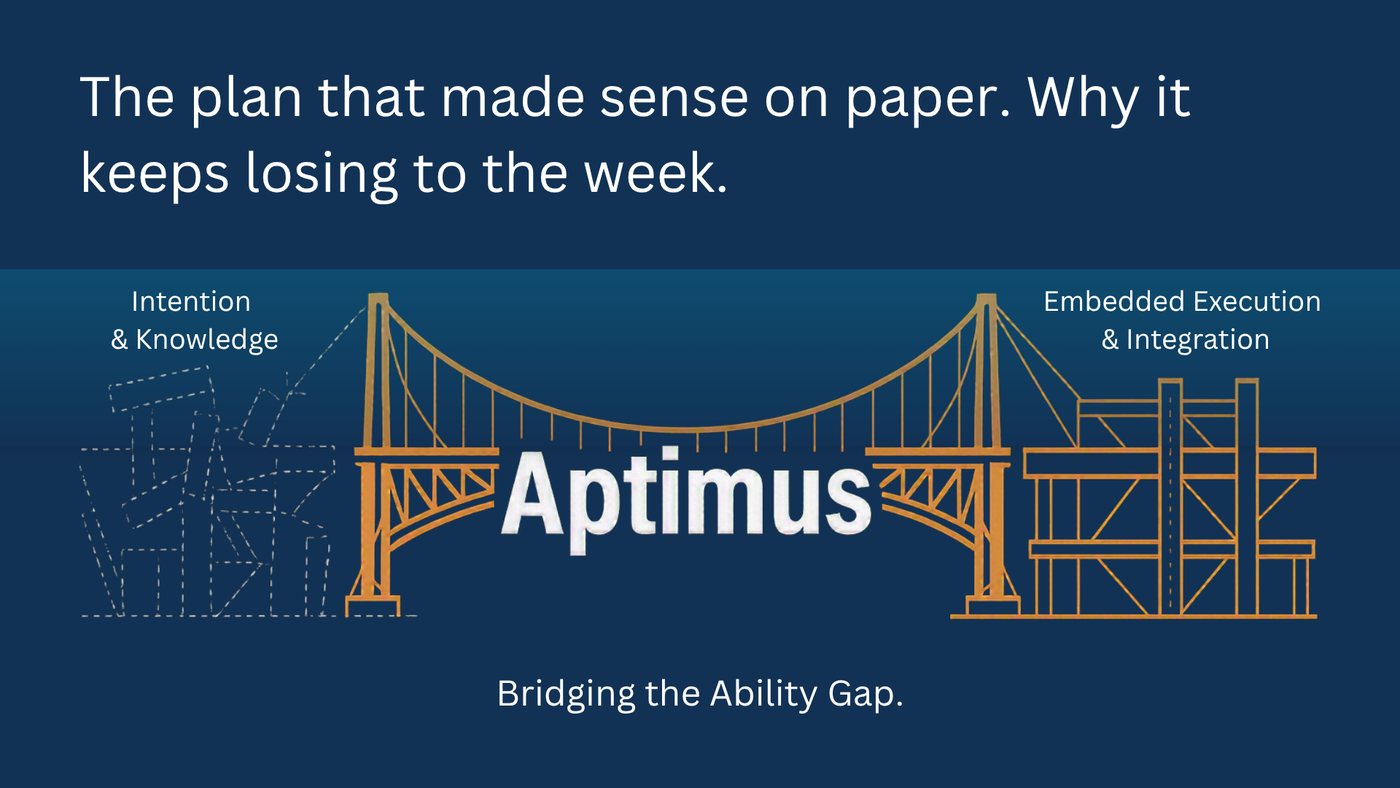
The plan that made sense on paper. Why it keeps losing to the week.
You've had the diagnostic
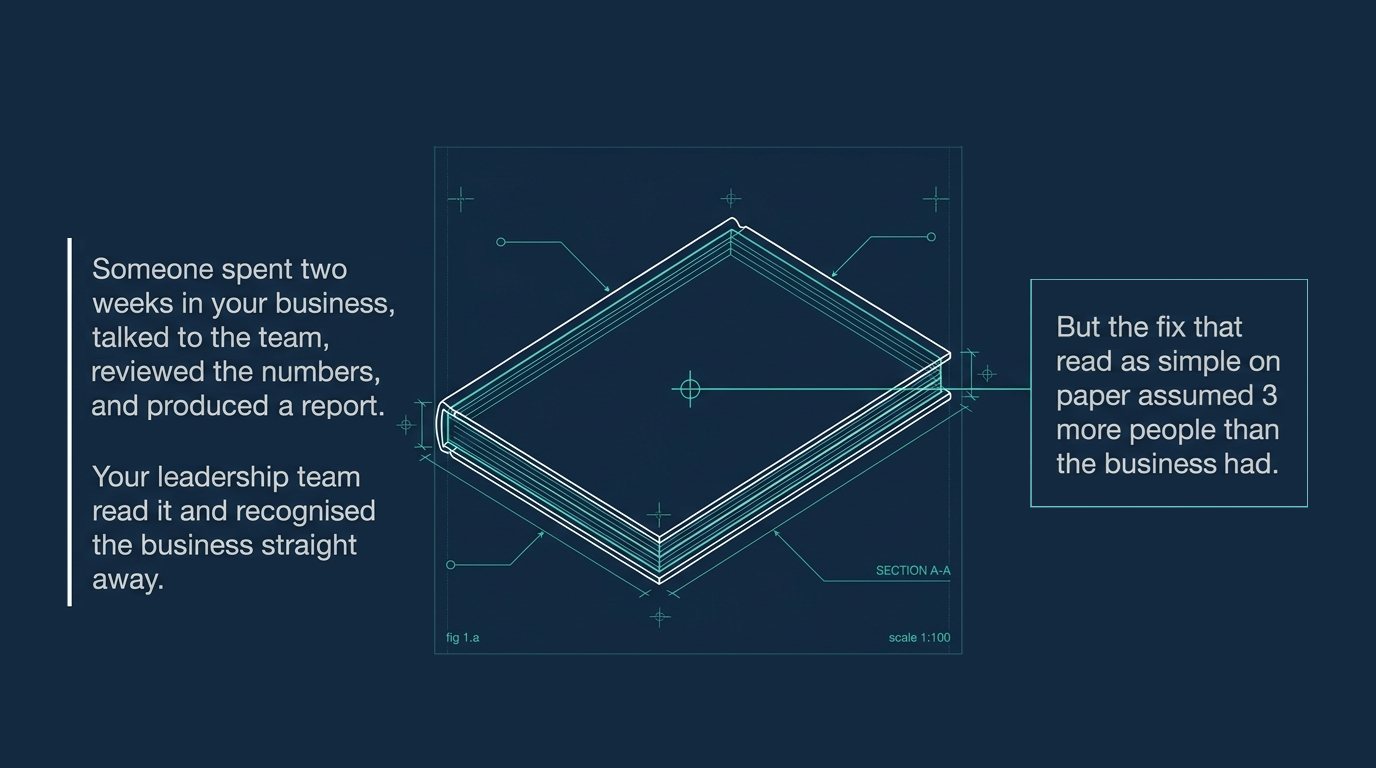
Someone spent 2 weeks in your business, talked to the team, reviewed the numbers, and came back with a clear picture of what wasn't working. Your leadership team read the report and recognised the business straight away.
Then you tried acting on it. The priority that looked obvious in the report needed a different sequence once your team started. A fix that read as simple on paper assumed 3 more people than the business had.
The report had captured the business well from a distance. Only once the team tried to put it into practice did its real requirements show up.
The dimension nobody accounts for
Many MSP owners have had a report that read their business well. The report can be accurate and still be flat.
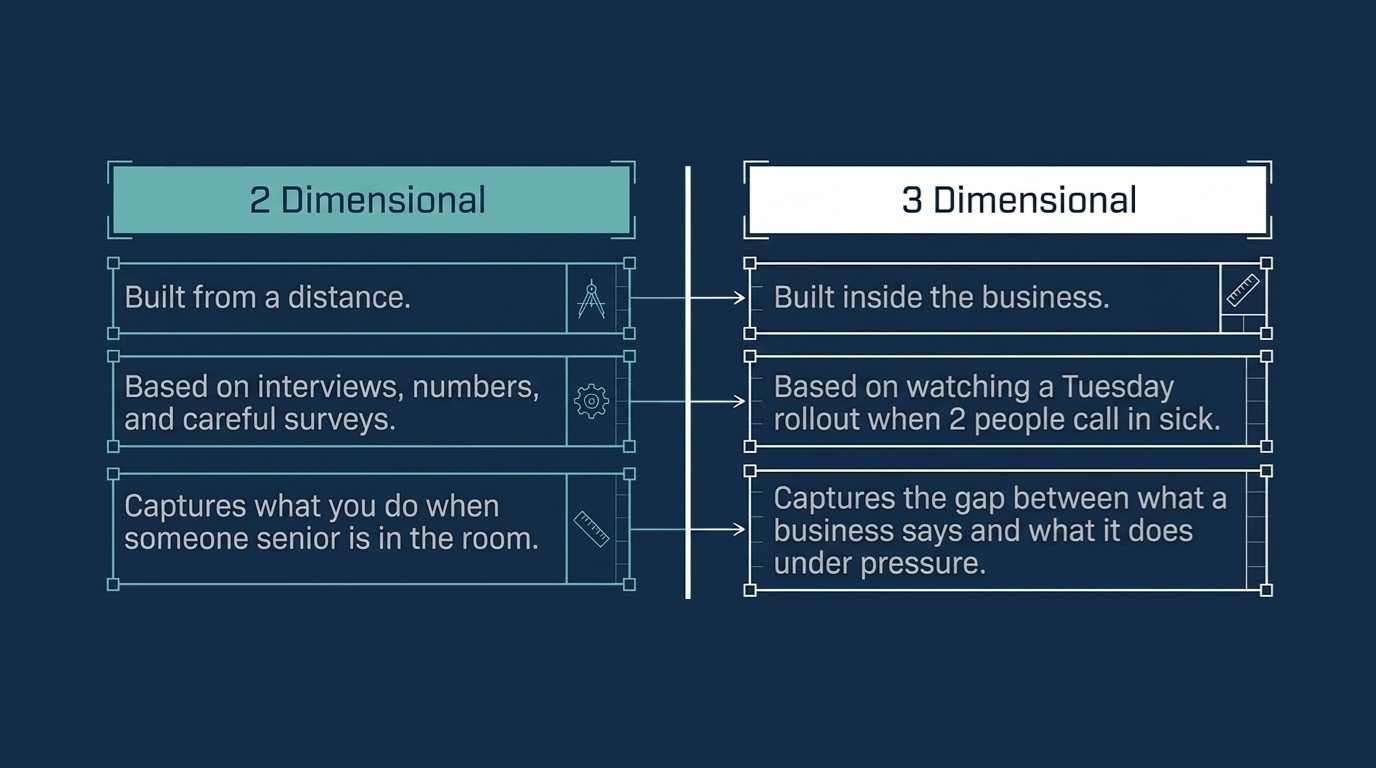
A 2 dimensional understanding of a business comes from a blueprint, a report, a resource, anything built to describe a business rather than live inside it. It's built from what can be gathered at a distance, interviews, numbers, a few days inside the building, a survey answered carefully because someone senior is in the room. It can all be accurate, and still miss what the business does when nobody's taking notes.
A 3 dimensional understanding is built differently. It comes from watching a team run a new process on a Tuesday when a client is escalating and 2 people have called in sick, from noticing which recommendation the leadership team agreed with in the room and never raised again, from being there long enough to see the gap between what a business says it does and what it does under pressure.
A consultant with 20 years in MSPs can still produce a 2 dimensional read if the engagement never moves past the interview and the report. What makes a read 3 dimensional is time spent inside one business, seeing how it runs.
What the resources still can't do
The market has well built resources now, documented processes, structured rollouts, something you can download and adapt in an afternoon. Learn the practice, tweak it for your business, train the team, go live, review what happened.
It's still a 2 dimensional artefact.
It describes what week 3 of a rollout should look like for a business like yours. What your service delivery manager does in week 3 depends on parts of your business whoever wrote it never saw.
The team running the rollout is dealing with real people, a real client base, a week that never quite matches the plan. Someone has to be there for the gap between the plan and the week, or the rollout becomes another initiative that looked finished and stalled the first time real conditions didn't match what the resource assumed.
What being 3 dimensional requires
Being there for that gap takes real attention, and it shows you things a resource never will.
It catches the gap between a team going through the motions and a team that's genuinely changed. You can't tell the difference from a status update alone. A team going through the motions says the new process is going well because that's the expected answer. The other one says the new process is going well and can also tell you exactly where it broke down last Tuesday. That second answer only comes out when someone's close enough to be trusted with the truth.
It sees the failure point before it becomes a pattern, a handover between 2 people who were never quite aligned, a step that gets skipped under time pressure, while there's still time to fix it, not weeks later once the numbers show the damage.
It's still there after the review, once everyone else has moved on. That review is often where a rollout comes undone. The team goes back to what's familiar because nobody's still watching, or because the review itself became a box to tick. By then, whoever wrote the resource is on to the next client, and it's the people still in the building who find out whether the change held.
This only shows up in the business, to whoever stayed long enough to watch it happen, regardless of how well the artefact was built.
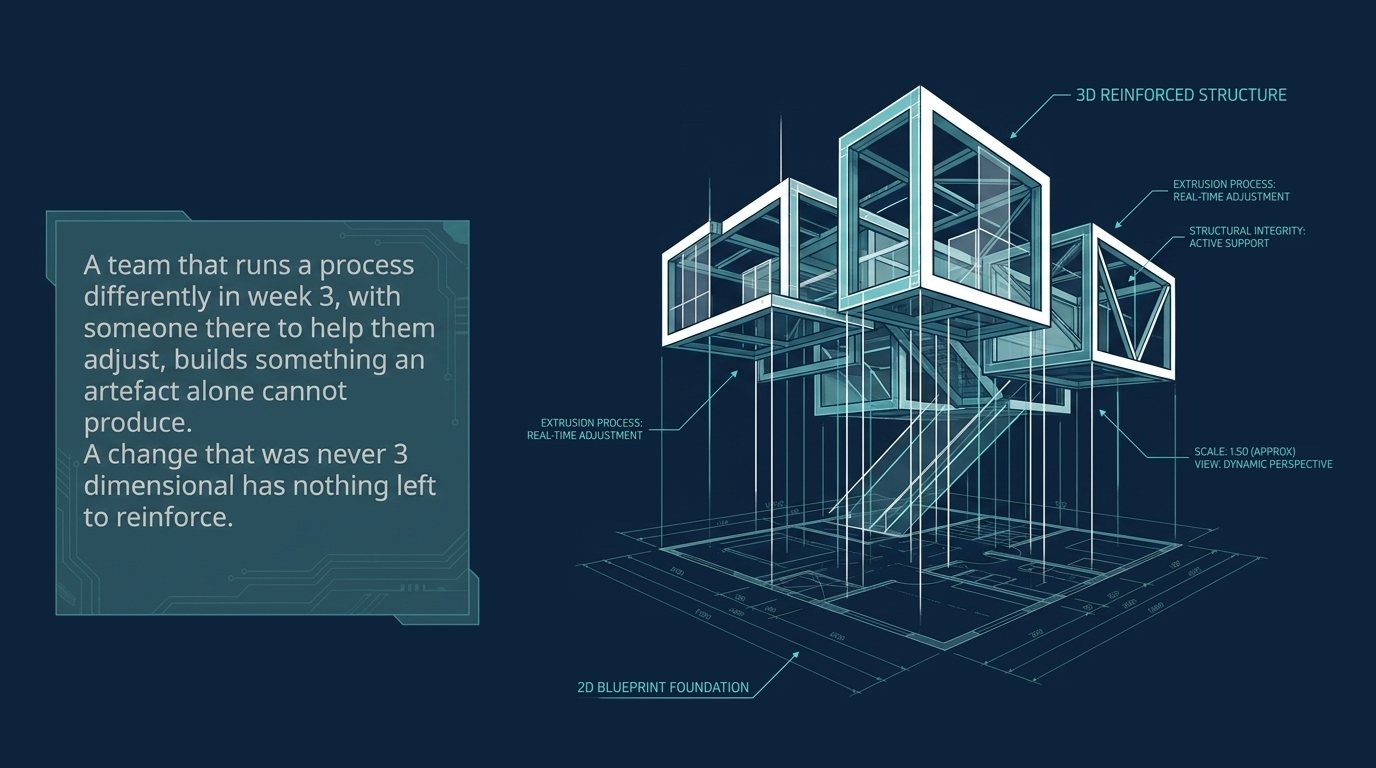
Ability and Reinforcement start to blur together here. A team that ran the process differently in week 3, with someone there to help them adjust, has built something a blueprint alone can't produce.
A change that was never 3 dimensional has nothing left to reinforce.
You've already seen this
Maybe a rollout in your business looked finished, then slid back to how things were done before. Maybe your team says the new process is fine but can't tell you where it broke down last week. Either way, it's the same gap.
Resources will keep getting better every year. Someone has to stay close to the business to see the gap between the plan and the week, and act before it becomes the new normal.
Aptimus helps MSPs close the gap between knowing and doing. If that's where you are, aptimus.com.au is the right place to start.
This edition first appeared in The Ability Gap newsletter on LinkedIn on 18 Aug 2026. Subscribe there to get the next one when it publishes.
Subscribe on LinkedIn Read this edition on LinkedIn