Why MSPs Keep Stalling: The Gap Between Knowledge and Ability
You know the feeling
You're in a room full of people who get it. The speaker is sharp. The content is generally good. Someone finally seems to understand the challenges of running and scaling an MSP.
You leave energised. The path forward feels clearer than it has in months.
Then Monday arrives. The inbox is full. A client is escalating. Someone on the team needs a decision right now. That notebook on the desk remains unopened. A week later you can barely remember why you were so fired up.
It's a change problem and it happens more often than anyone admits.
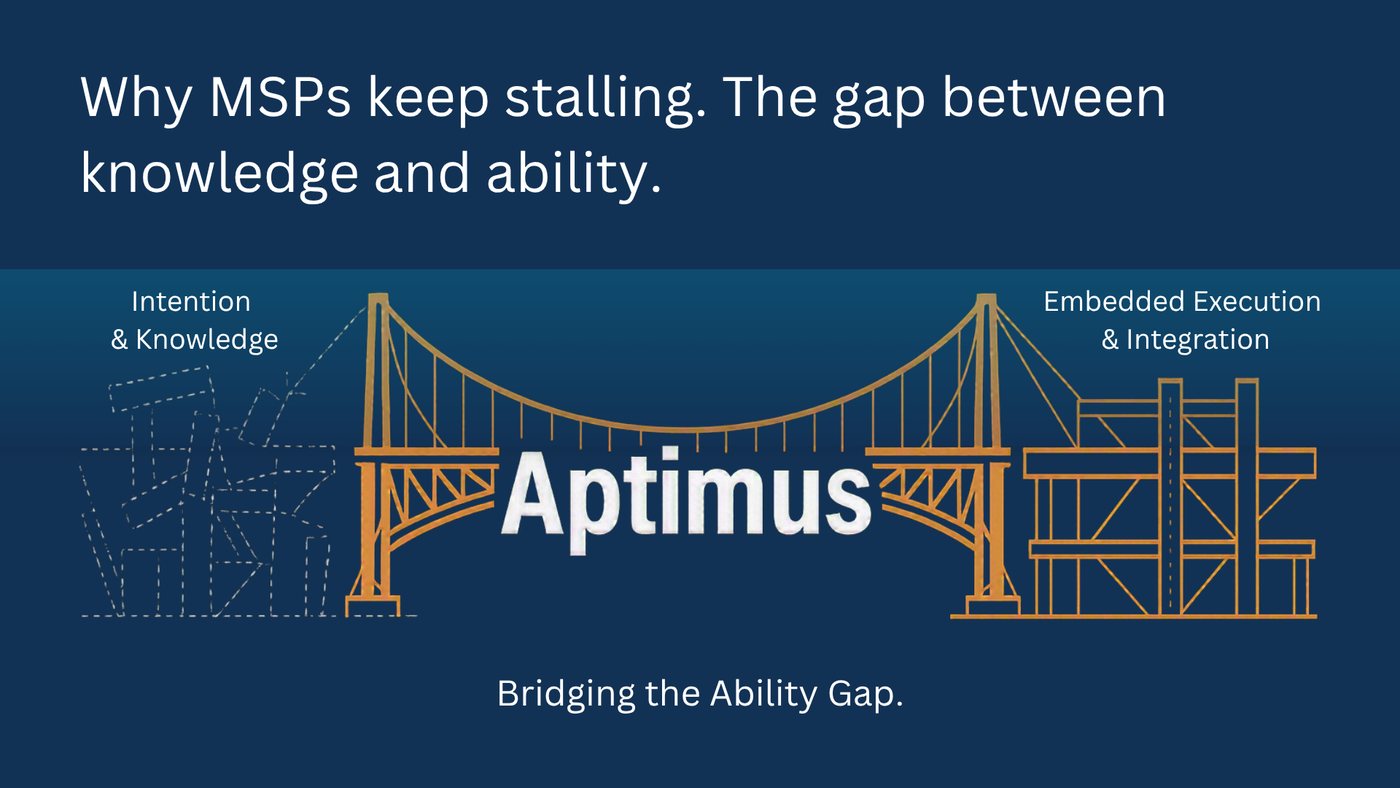
Those events are valuable, the speakers are often excellent, the connections are real. But this article is about what happens afterwards. Specifically why the gap between Knowledge and Ability is where MSP growth stalls.
The gap nobody talks about
Denial looks like activity.
The MSP market has no shortage of support. Events, peer groups, vendor programs, certifications, frameworks, consultants. The quality is generally high. Some of it is excellent.
But if you map the support available against a simple change model, something becomes obvious. Almost all of it lands in the same place.
Prosci's ADKAR model breaks change into 5 stages. Awareness of the need to change. Desire to make it happen. Knowledge of what to do. Ability to do it. Reinforcement to make it stick.
The MSP industry has built an impressive machine around the first 3. Awareness is everywhere. Peer groups build Desire well. Knowledge is arguably the best served stage of all.
Then it stops.
The stall point is almost always Ability and Reinforcement. Ability requires proximity, repetition and someone working in the detail of your specific business.
It's a change problem and it needs support the market seldom provides.
How change works
We tend to treat change like a decision. We decide to do something differently and expect the doing to follow. Sometimes it does.
Change is a process. It loops, stalls and loses momentum before it sticks. It starts promisingly then fades somewhere between intention and execution. It's how human beings respond to anything that threatens the way things currently work.
Change creates uncertainty and uncertainty feels like risk. Even when the current situation is clearly limited, it's a known situation. We know where the edges are. A new way of doing things, even a better one, lacks familiarity. So we resist it out of self-protection.
This is why good intentions rarely produce new behaviours on their own and why change takes longer than anyone plans for. It takes time for new ways of working to feel normal rather than forced.
Resistance is rational
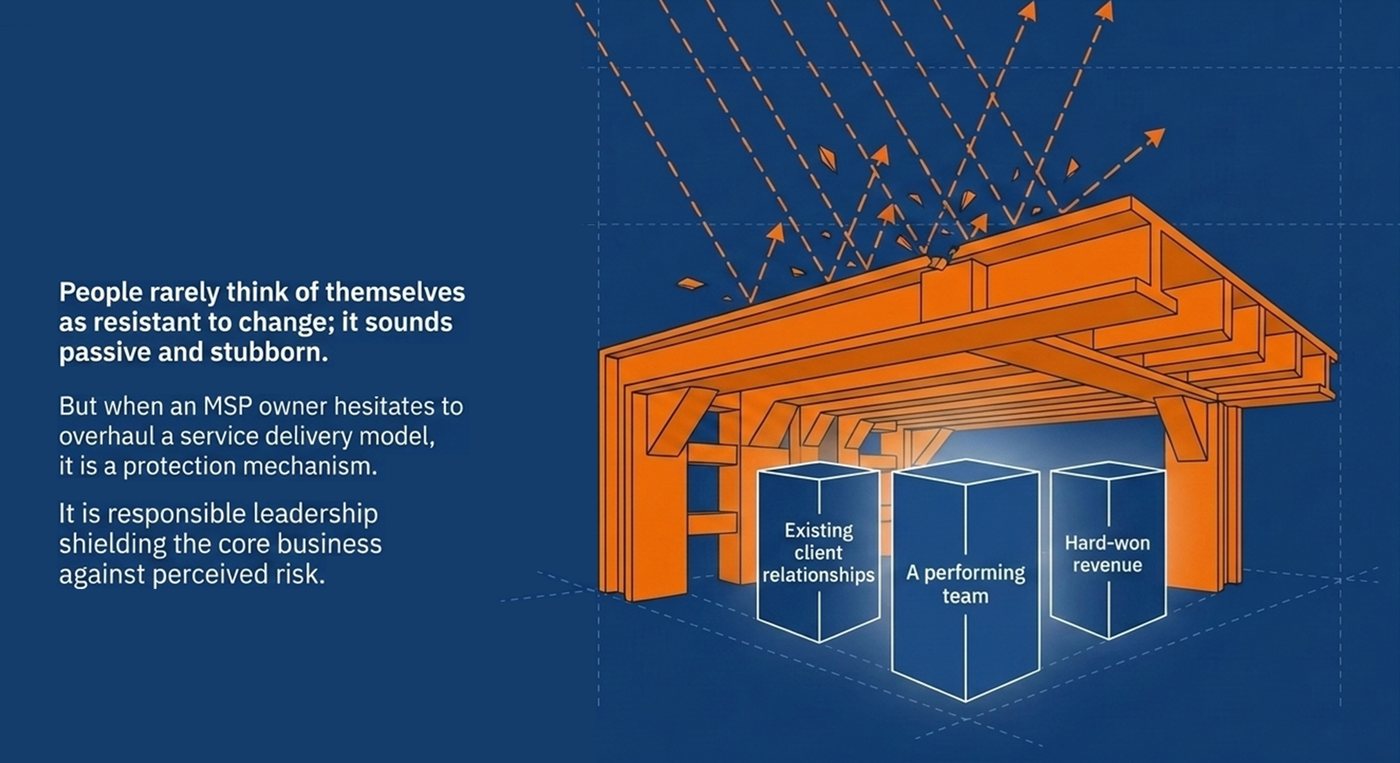
People don't usually think of themselves as resistant to change. It sounds passive. Stubborn. Like something that happens to other people.
Resistance is a protection mechanism.
When an MSP owner hesitates to change their service delivery model they're protecting client relationships built on the way things currently work. A team that's finally performing. Revenue that took years to build and could be disrupted by getting the transition wrong.
That's responsible leadership, not irrational hesitation.
Resistance also shows up in ways that are hard to recognise. Postponing risky decisions. Agreeing in the room then doing nothing afterward. Starting an initiative with genuine enthusiasm then letting it fade. Delegating something important to someone who was never going to prioritise it.
These are predictable responses to perceived threat. They happen to capable, experienced operators all the time.
The resistance itself is manageable. The problem is when it goes unnamed. When nobody says this is hard and here's why it operates invisibly. It looks like poor execution. The real cause is more understandable than that.
Naming it is how you start working through it.
The shape of the journey
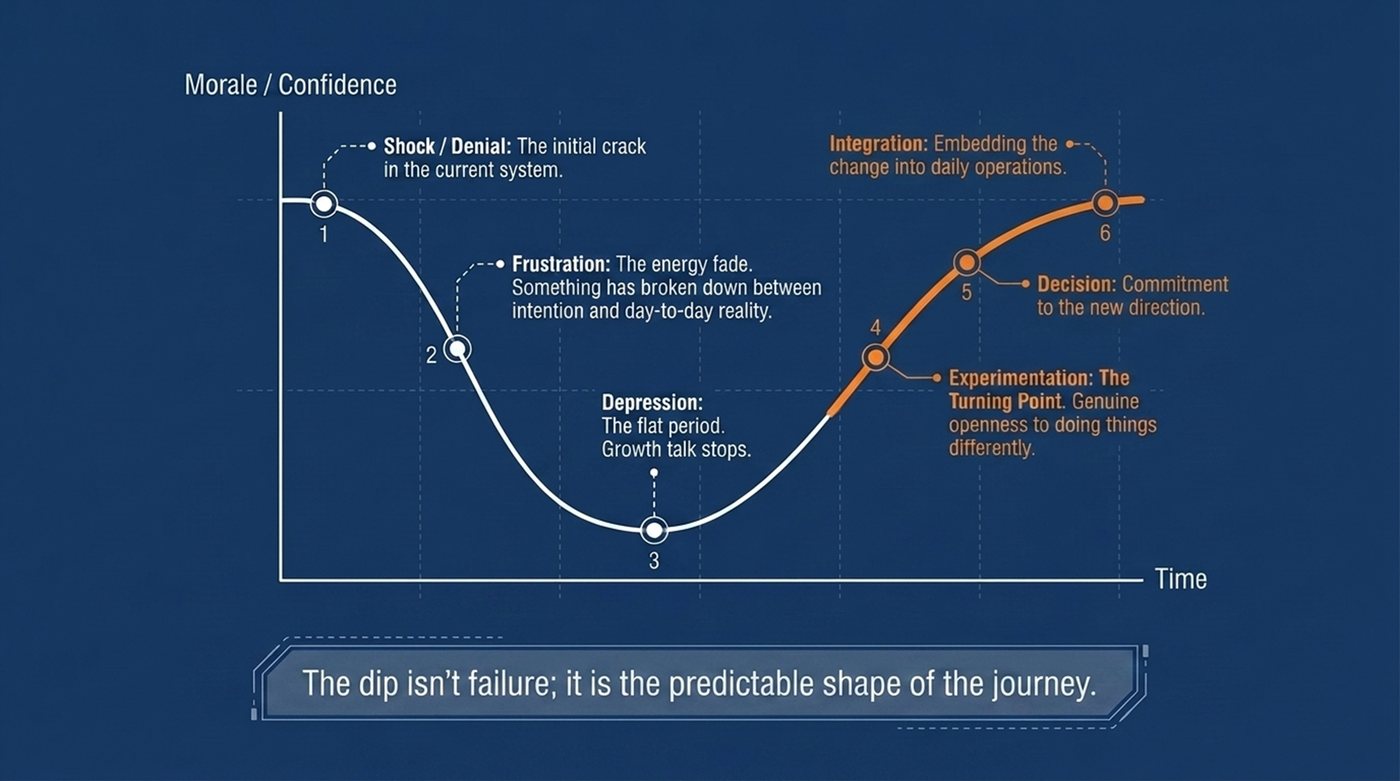
In the 1960s psychiatrist Elisabeth Kubler Ross mapped the emotional stages people move through when facing grief. The curve applies to organisational change with uncomfortable accuracy.
Shock is the moment something cracks the assumption that the current model is sufficient. A key person leaves and the business struggles to function without them. A loyal client goes elsewhere. A revenue ceiling appears that won't move.
Denial follows and this is where it gets interesting.
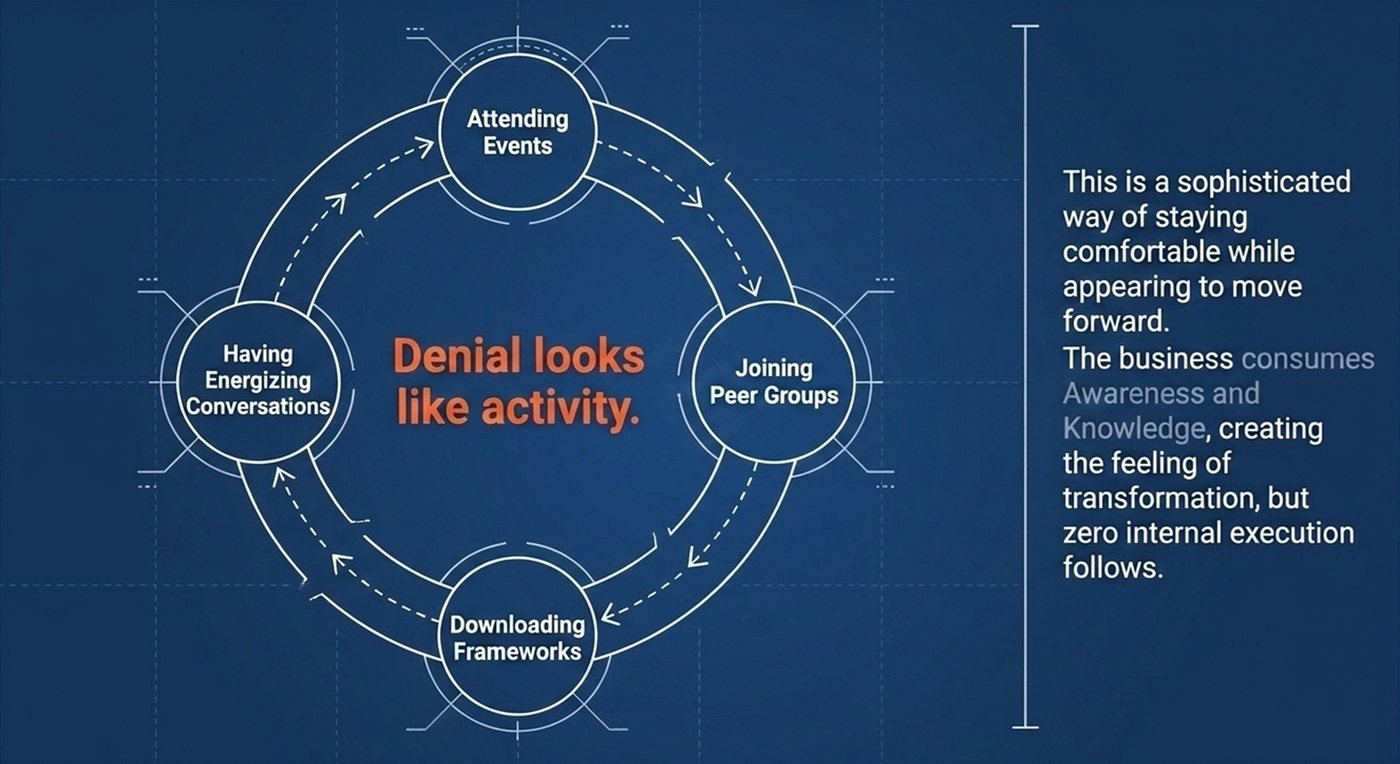
Denial looks like activity.
Attending events, joining peer groups, downloading frameworks, having energising conversations about what needs to change. All of that feels like progress. But it can also be a sophisticated way of staying comfortable while appearing to move forward.
This is the stage where the bulk of MSP support operates. Awareness and Knowledge are genuinely valuable. But a lot of what feels like transformation work is happening inside denial.
Frustration arrives when the activity produces less than expected. You've attended the events. Started implementing some of the advice. Put genuine effort in. The business has moved less than expected and the gap feels as wide as ever.
The energy fade lives here. The buzz from the last event has worn off. The initiative that launched with momentum has slowed. Something has broken down between the intention and the day to day reality.
Depression in a business context looks like flatness. A quiet period where growth stops being talked about. Where the owner focuses on keeping things stable. Where ambition goes a little underground.
Where the owner stops pushing and starts listening.
Experimentation is the turning point. The owner starts trying things differently. A genuine openness to doing things in a way they haven't tried before. A willingness to ask for a different kind of help.
This is where real change becomes possible and where the right support makes an enormous difference.
Decision and Integration is where the new way of working stops feeling like effort and starts feeling normal. The team has stopped fighting it because it has stopped feeling like change. It's just how things work here.
Getting from experimentation to integration is the hard part. It takes longer than anyone expects. It requires consistency, patience and someone close enough to notice when things are sliding back before the momentum is lost.
The layers nobody mentions
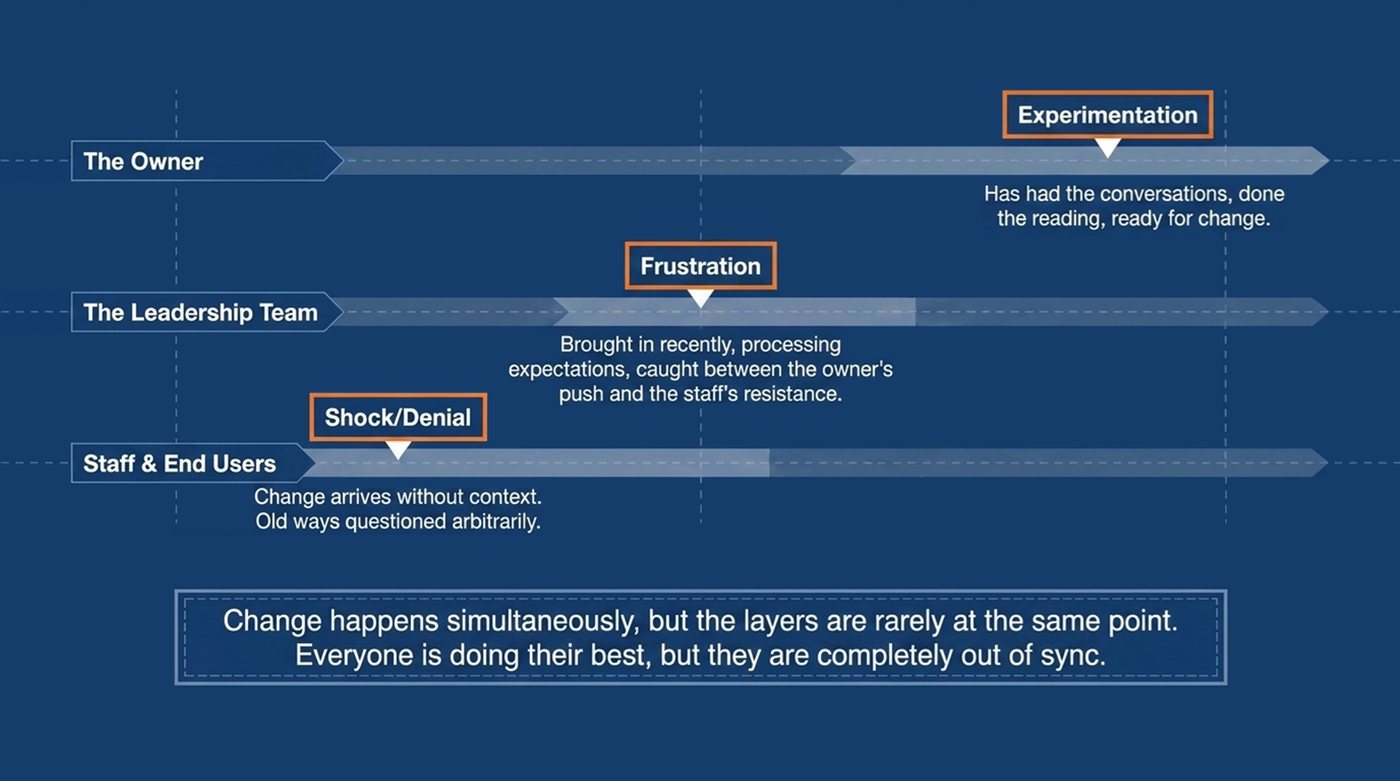
Change happens simultaneously across multiple layers of the business. Those layers are rarely at the same point on the curve at the same time.
The owner has been sitting with the need to change for months, sometimes years. They've done the reading, attended the events, had the conversations. They're somewhere between frustration and experimentation. They're ready, or close to it.
The leadership team is in a different place. They may have been brought into the conversation recently. They understand the direction but weren't part of the thinking that got the owner there. They haven't had the same runway to process what's being asked of them and they're expected to drive something they're still processing.
Staff and end users are further back again. Meaningful change is often announced to them last. New processes arrive without clear explanation. Old ways get questioned without obvious reason. From where they sit it feels arbitrary and unsettling even when the intention at the top is good.
3 layers with different positions on the change curve. All moving at different speeds with different information and different things at stake. This misalignment is a frequently overlooked reason transformations stall. The owner wants faster movement than the team can sustain. The leadership team gets caught between pushing down and managing up. Staff resist changes they haven't been given context for.
ADKAR applies at every layer. Each person needs their own Awareness, Desire, Knowledge, Ability and Reinforcement. A leadership team that has Knowledge but hasn't built Desire yet stalls. An owner with Desire but without the Ability support to match it stalls too. Staff with Awareness but without the Knowledge of what's expected will fill the gap with assumptions. Those assumptions pull in different directions to where the owner is trying to go.
Effective change support works across all 3 layers with the right message for where each group is. That's slow work. But it's the work that separates a transformation that gets announced from one that takes hold.
What the Ability stage requires
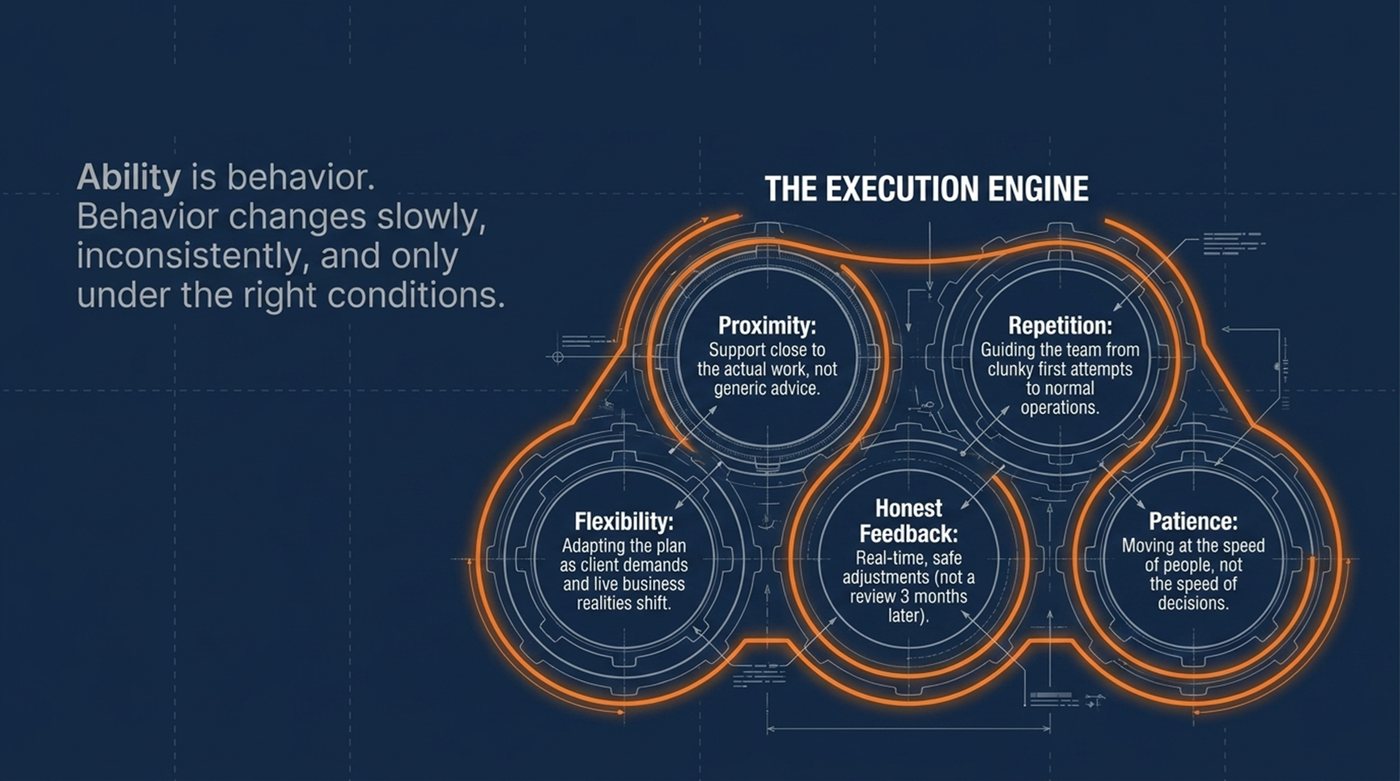
Ability is the unglamorous part of change. No keynote covers it. It resists packaging into a framework and handing over in an afternoon.
Ability is behaviour. Behaviour changes slowly, inconsistently and only under the right conditions.
Proximity: Support needs to be close to where the work is happening. Someone who understands the specific shape of your business, your team, your clients and your history. Generic advice applied to a specific situation produces generic results.
Repetition: New behaviours need repetition. The 1st time a leadership team runs a new process it'll be clunky. The 3rd time it'll be better. By the 10th time it starts to feel normal. That journey from clunky to normal is where implementation support tends to stop short and change fades.
Patience: Change at the Ability stage moves at the speed of people, not decisions.
An owner can decide to change the service delivery model in an afternoon. Getting a team of 12 to operate differently might take 6 months. That's reality and it requires a kind of consistent presence the event format and advisory model don't provide.
Honest feedback: People building new abilities need to know what's landing and what needs adjustment in real time. Not in a review meeting 3 months later. The feedback loop needs to be short, specific and safe enough that people can receive it openly. Building that kind of trust takes time and resists shortcuts.
Flexibility: The plan that looks right from the start never survives contact with a live business. Client demands change. People leave. The support needs to flex with the business rather than holding it to a plan that no longer fits.
The Ability stage is a relationship. Someone who knows your business well enough to see the gap between what you're saying and what's happening. Who can tell the difference between a team that's genuinely moving and one that's performing busywork. Who stays close enough and long enough to make sure the gains hold when the pressure goes up.
This is what Aptimus does. Embedded in the work, close enough to see what's actually happening, long enough to make sure it holds.
What readiness feels like
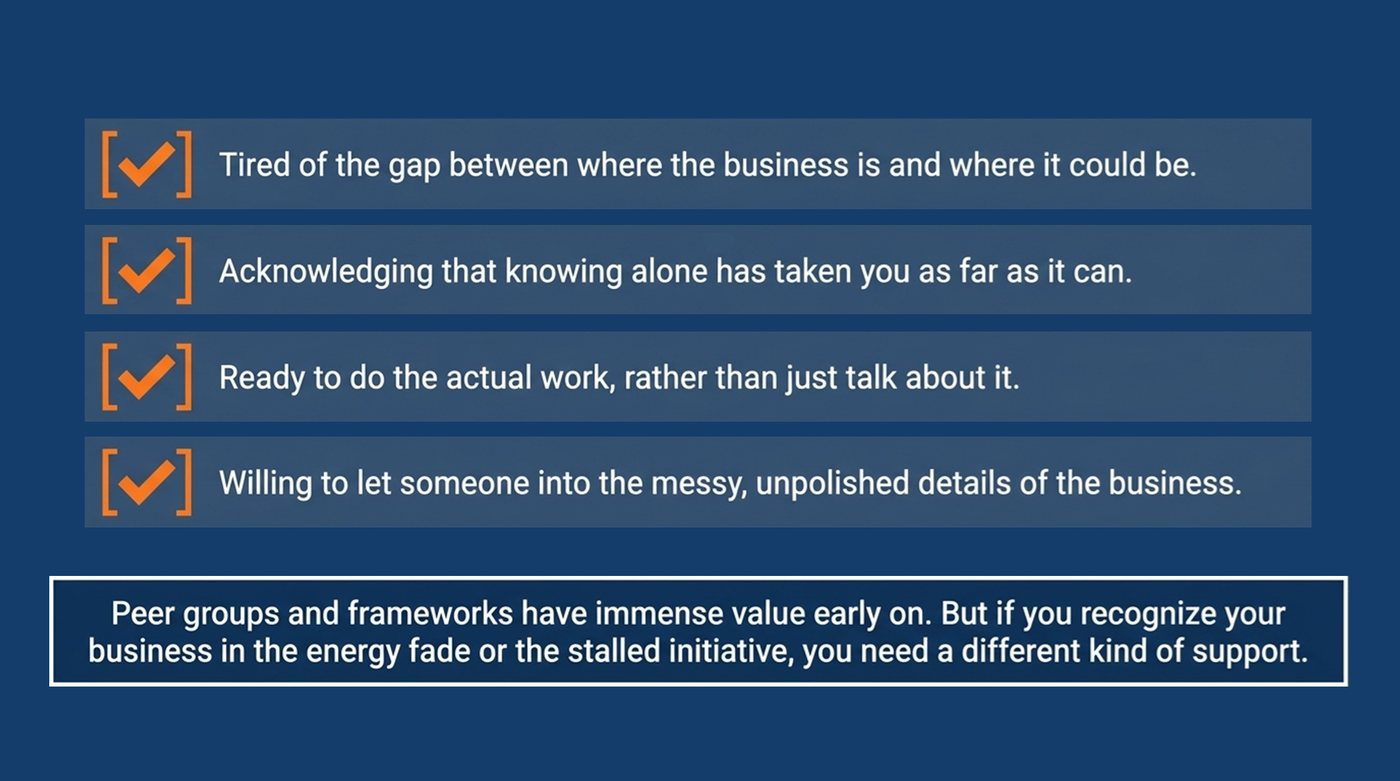
If something in this article has felt uncomfortably familiar, if you've recognised your business in the energy fade, the stalled initiative, the leadership team that hasn't found its pace yet, it might be worth a conversation.
MSP owners don't need more information. They need structures that convert intention into behaviour.
Aptimus helps MSPs close the gap between knowing and doing. If that's where you are, aptimus.com.au is the right place to start.
This edition first appeared in The Ability Gap newsletter on LinkedIn on 14 Jul 2026. Subscribe there to get the next one when it publishes.
Subscribe on LinkedIn Read this edition on LinkedIn